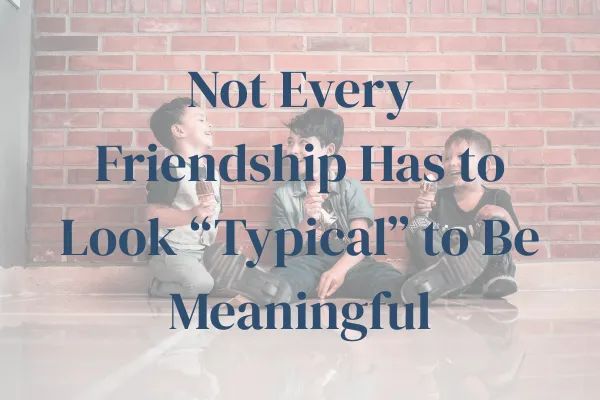
Not Every Friendship Has to Look “Typical” to Be Meaningful
Not Every Friendship Has to Look “Typical” to Be Meaningful
Sometimes parents worry because their child’s friendships do not look the way they expected.
Maybe the interaction is quieter.
Maybe both children talk mostly about shared interests.
Maybe the play is repetitive.
Maybe they sit side-by-side instead of constantly talking.
But connection does not only exist in neurotypical social styles.
Many autistic children connect deeply through:
shared routines
parallel play
humour
movement
special interests
sensory experiences
predictable interaction
and simply feeling accepted without pressure
When children are constantly placed in environments where they are expected to adapt, mask, or “keep up,” social interaction can become emotionally draining.
This is why relationships with peers who understand their communication style can feel so important.
I often encourage parents to think about balance.
Yes, children benefit from participating in wider community settings and learning how to navigate different social environments.
But they also need spaces where:
they can relax
they do not feel “behind”
they are not constantly corrected
and they can experience genuine belonging
This might mean:
autism-friendly clubs
supported playgroups
hobby-based activities
smaller social groups
or simply building friendships with children who share similar communication styles
The goal is not to isolate children from the world.
The goal is to make sure they experience both challenge and safety.
Every child deserves relationships where they feel understood — not just included.
If you would like to explore this more feel free to book a 30 minute discovery call by visiting my website -earlyinterventionclinic.co.uk